

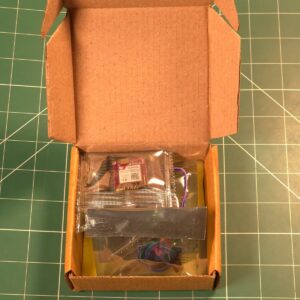

BONUS: Each participant gets their own IndusBoard COIN (worth ₹ 2,359) to take home after the training, so that they can improve this project even after the workshop through our community, or develop more such exciting projects.
BONUS 2: Personalised certificate by EFY and Shalaka Technologies for all participants.
Modern vehicles are basically computers on wheels. They generate real-time data (speed, temperature, throttle, fuel, etc.) on a network called CAN Bus — and a gateway pushes selected data to the cloud for dashboards, diagnostics, and fleet tracking.
In this hands-on workshop, you will build a mini Connected Vehicle simulation that mirrors how real telematics works: ECU Simulator → CAN Bus → IndusBoard V2 Gateway → Cloud Dashboard
By the end, you’ll have a working live dashboard showing vehicle telemetry streaming in real time.

What You’ll Build
A live Connected Vehicle demo where:
- An ECU simulator generates vehicle signals (speed, fuel, coolant temp, throttle)
- Signals travel over a CAN network
- IndusBoard V2 acts as a gateway and publishes data to the cloud
- A cloud dashboard shows live graphs and gauges
- This is the same foundation used in:
- Telematics systems (fleet tracking)
- EV dashboards + apps
- Vehicle diagnostics + service tools
- Predictive maintenance pipelines
This is perfect for:
- Engineering students who want a real portfolio project
- Embedded / IoT developers entering automotive
- Professionals wanting a hands-on CAN + IoT gateway demo
- Anyone curious about “how connected vehicles actually work
You don’t need deep automotive experience — we’ll build it step-by-step.
What You Will Learn (Simple + Practical)
By the end, you’ll understand and actually implement:
- CAN basics (frames, IDs, priority, why it’s used in vehicles)
- How vehicle ECUs “broadcast” signals on a CAN network
- How a Gateway ECU works (receive → decode → uplink)
- How to publish telemetry to the cloud using MQTT
- How to create a live vehicle dashboard
Workshop Highlights
- Build a complete end-to-end system (not just theory)
- See live speed/fuel/temp graphs like a real telematics product
- Learn the “vehicle data pipeline” mindset (ECU → CAN → Gateway → Cloud)
- Great for portfolios, demos, and interviews
- You take home the architecture + code flow you can extend later
Quick Agenda
- Connected Vehicle Overview (how it works in real cars)
- CAN Bus Basics (simple explanation + key concepts)
- Build a CAN Data Sender ECU (simulated vehicle signals)
- Build the IndusBoard V2 CAN Receiver / Gateway
- Decode signals and publish to cloud via MQTT
- Create a ThingsBoard live dashboard (speed, fuel, temp, throttle)
- Demo scenarios: “city drive”, “highway cruise”, “overheat fault”, etc.
What Participants Get
- A working Connected Vehicle understanding
- Dashboard + telemetry pipeline understanding
- Reference architecture for future projects:
- fleet dashboards
- EV dashboards
- diagnostics tools
- industrial CAN gateway products
Hardware Used
- IndusBoard V2 (Gateway + Wi-Fi + MQTT)
- Arduino (Vehicle ECU simulator)
- CAN module(s) (MCP2515)
- CAN wiring + USB cables
- Cloud dashboard (ThingsBoard)
Optional “Next-Level” Extensions (Post-Workshop)
If you want to take it further, you can upgrade this into:
- Fault codes + alerts (check engine style)
- More signals (battery voltage, SOC, odometer)
- “Publish only on change” logic (gateway hygiene)
- Logging + playback (vehicle data recorder)
| Trainer Profile — Hrishikesh Kamat Hrishikesh Kamat is an Embedded Systems and IoT product builder who has spent the last decade taking ideas from concept to working hardware–firmware–cloud systems. He brings a rare mix of hands-on engineering depth and real product execution experience—the kind students actually need to become industry-ready. He has led and mentored engineering teams across embedded and IoT domains, building complete solutions that span microcontrollers, sensors, wireless connectivity (BLE/Wi-Fi), industrial protocols, data pipelines, and dashboards. His work style is practical and outcome-driven: every session is designed so participants don’t just “understand” a topic—they build something real, debug it, and learn how to explain it clearly in interviews. As a trainer, Hrishikesh is known for breaking complex concepts into simple mental models, then immediately translating them into labs and mini-projects. He focuses on the skills that make candidates stand out: structured debugging, clean coding practices, system thinking, and portfolio-ready project documentation. His workshops are built like real product sprints—clear goals, guided execution, checkpoints, and take-home deliverables (code, templates, checklists, and a roadmap for what to learn next). He also actively works with engineering students and early professionals through workshops, mentoring, and structured learning programs, helping them build confidence through real competence—not motivation talk. If your goal is to enter embedded systems or IoT with a strong practical foundation, Hrishikesh’s sessions are designed to get you there faster, with clarity and real-world relevance. |
Venue: Shalaka Connected Devices LLP [Cosmo Co-works], 4th Floor, Royal Tradeville, opposite to Perfect 10, Balewadi, Pune, Maharashtra 411045
Date: 28 February 2026
Timing: 10:00 AM to 3:30 PM (Includes a 30-minute lunch break; lunch not included)


Reviews
There are no reviews yet.